
Cover Story
Turning tide: food majors gain traction on Scope 3
Scopes 1 and 2 are largely controlled, but Scope 3 emissions remain a challenge. Yet, amid uneven progress, momentum and collaboration are building. David Burrows reports.
Main video credit: dee karen / Shutterstock.com
This month Pladis published the numbers for its greenhouse gas emissions. In 2025, the total was 3.5MtCo2e, of which 3.2MtCO2e (or 90%) were Scope 3, the indirect emissions that lie up and down its supply chain. Some 72% of those Scope 3 emissions were from raw materials, with cocoa, dairy, fats and oils its highest impact commodities, together representing 1.6MtCO2e.
The figures are significant, representing a three-year journey for the company’s director of sustainability Suzanne Westlake. “When I arrived in November 2023 we had just agreed to pursue the Science-based targets initiative (SBTi),” she says, a move that came amid growing expectations from retailers across the UK and Europe for their tier-one suppliers to act. But making a commitment was the first step: setting robust targets and delivering against them requires a clear understanding of the company’s full emissions footprint, including its sprawling Scope 3 emissions, where gaps in supply-chain data are commonplace. Westlake’s first appointment was “someone with a statistical background. And it turns out our data was in a better place than I had thought.”
Look across the emissions figures for food manufacturers and you might think that is the exception rather than the rule. Companies are struggling to keep a lid on their total emissions – Scopes 1 and 2 are by and large being controlled and cut, yet Scope 3 emissions present an altogether different challenge. As UK agtech company Agrivi notes: “Scope 3 emissions are often scattered across thousands of farms, suppliers, and processes. The data is fragmented. The standards are evolving. And the responsibility is shared.”
A problem shared, so it is thought, is a problem halved and many food manufacturers have set targets to achieve that in respect of their emissions within the next few years. Will they manage it?
That was the question being asked as some of the world’s largest food companies produced their latest figures over the summer. Most set initial targets or at least committed to net-zero at some distant point in the future, around the start of this decade; interim targets are generally around 2025 and 2030. Just Food’s analysis at the early stages of these net-zero journeys in November 2022, showed emissions were heading in the wrong direction – up instead of down.
At Mars, for example, emissions increased 6% between 2020 and 2021. “The long lead-time between project initiation and emission reductions delivery is a persistent challenge, particularly when scaling up climate-smart agriculture,” the Snickers maker offered as explanation. (Climate-smart agriculture is one of six “big bet” strategies the manufacturer has identified to achieve net-zero, together with: adoption of renewables; stopping deforestation; recipe reformulation; streamlining logistics; and redesigning packaging for circularity).
Growth versus green
In June, there was better news as Mars posted its largest annual absolute greenhouse gas reduction to date – 6.4%. Total emissions have been cut by 16.9% since the 2015 baseline, while growing the business by approximately 75%. As one observer noted on social media: “Nice work Mars, Scope 3 is such a big challenge especially in a rapidly growing business.”
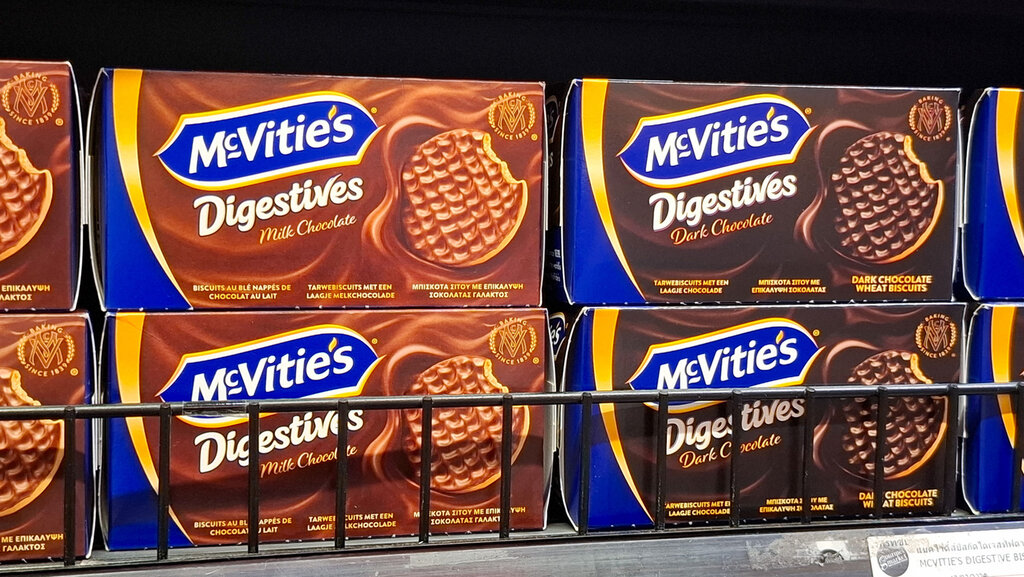
This is easily forgotten: food companies looking for commercial growth also have to keep their emissions in check and, crucially, in line with their agreed SBTi targets. Pladis for example is aiming to transform McVitie’s – its UK biscuit brand – into a £1bn ($1.33bn) global brand, with China’s snacks market an initial focus. More snacks mean more ingredients and potentially higher emissions.
Credit: Sreehomm / Shutterstock.com
The long-term target is net-zero across its full value chain by 2050. However, absolute Scope 1 and 2 greenhouse gas emissions must come down by 58.8% and Scope 3 by 35% by 2034 (from a 2023 baseline). The SBTi validated targets also include a 42% reduction in forest, land and agriculture (Flag) emissions by 2034. Having been in the weeds of supply chain emissions, Westlake can now see the wood for the trees — and the work to reduce emissions begins with ensuring those key commodities are deforestation-free.

We need to double‑down on what we source, from where and from who.
Suzanne Westlake, Pladis
Westlake and her team have been working more closely with their colleagues in procurement, for example, and with suppliers to improve the quality and traceability of its emissions data. One example is SD Guthrie, which provides certified and sustainably sourced palm oil for the company’s UK and western Europe operations and now shares product-specific data (which strengthens Pladis’s own reporting, so Westlake can more accurately understand the emissions impact of the supply chain). “We need to double-down on what we source, from where and from who,” she tells Just Food. “For me, traceability is the key.”
Mandatory reporting requirements under EU initiatives like EUDR (the new deforestation regulation) and CSRD (corporate sustainability reporting directive) have focused minds and helped move the needle. But patience is perhaps needed as food companies use the ‘better’ picture they now have of their supply chain and where the emissions sit to develop plans for deeper cuts in their emissions.
“You can’t just flick a switch,” says Emma Keller, head of sustainability for Nestlé in the UK and Ireland. Tackling Scope 3 emissions is “messy” and “harder than we thought it would be”, she adds, pointing out the company’s 1% reduction in the first year of reporting against its net-zero targets. “But now we have five years of learning behind us.”

Credit: Vardanyan Karen / Shutterstock.com
Give them a break?
There are certainly companies further along this journey on Scope 3 than others but there is a feeling there is a critical mass now and far more collaboration than ever. At the last count, at the beginning of October, 12,160 companies across all sectors have validated their science-based targets through SBTi, representing 40% of global market capitalisation. This is “a clear sign of the growing momentum behind science-based climate action [...] creating a powerful market signal that is influencing procurement, supplier relationships, investment and capital allocation,” SBTi said on social media at the time.
Each company’s progress should be set within context too. Pladis was formed just ten years ago when Yıldız Holding combined biscuit and confectionery businesses into a single London-headquartered subsidiary. The company brought together brands including United Biscuits, Ülker, DeMet’s Candy Company and Godiva under a heritage spanning more than 180 years. Westlake has managed to capture the company’s full carbon footprint and set ambitious targets verified by SBTi in just three years. “It hasn’t been easy,” she says, but those around her in the business, from procurement to finance, are “more comfortable about this journey now that we have a plan”.
Experts, mindful of the narrative stemming from the US that efforts to climate change are slipping away, are also keeping their glasses half full. Rachel Calomeni, SVP of growth and innovation at HowGood, a consultancy, is one of them.
She explains: “Many 2030 targets were set before companies had a baseline specific to their own supply chain, built on global average emission factors. That was the right call at the time because it got commitments made and pushed the industry to act. But you can’t plan reductions against an average.” Carbon measurement is maturing fast (accelerated, like everything, by the adoption of AI). As companies move from averages to supplier-specific product carbon footprints, they’re finding their real hotspots and redirecting effort to the reductions that deliver the most per dollar, says Calomeni. “That’s a healthy correction, not a step back,” she adds.
On the ground, change will take time too. For most crops, a change in farming practice takes around five years to show up on a company’s carbon balance sheet, for example, so anything meant to land by 2030 needed to start with farmers last year. On top of that, it takes time to engage suppliers, build real baselines and absorb new Flag and land-sector accounting rules. Reported reductions are still small, but they’re the early part of an S-curve, according to Calomeni.
Nestlé is one of those trying to set the pace. The world’s largest food company has committed to achieving net-zero emissions by 2050 with key milestones to reduce emissions by 20% by 2025 and halve emissions by 2030 aligned to the SBTi. The first hurdle has been cleared (emissions have been cut by 24.5% against the 2018 baseline). “Our jumps have got progressively bigger,” says Keller.
Because of our scale, we are also not the fastest of companies.
Emma Keller, Nestlé
Concerns have been raised about the way in which Nestlé accounts for the carbon in its supply chain (and shadows have been cast over SBTi too). But you can’t fault the company for investing more than many to manage those Scope 3 emissions. Regenerative farming has been a focus, with the company “overachieving” in some of the projects it’s rolled out, and under-achieving in others. The likes of Keller are faced with a relentless stream of solutions to deliver Scope 3 emissions, so picking the winners is not easy. “Because of our scale, we are also not the fastest of companies,” Keller admits.
Initial talks for the latest move – to use 51% regeneratively-farmed wheat in its KitKats made in the UK – began in 2023, for example. Farmers are paid a higher price but emissions will fall as a result of their on-farm practices, which include fewer chemical inputs and a focus on soil health. The search is on for more farmers to get involved, so more wheat can be grown in this regenerative, but also resilient, way (Recent reports that regenerative crops fared better than conventional ones in the face of this summer’s weather will add grist for the mill).
Slow progress on methane
Keller says cattle feed is another area of interest. A new milk plan, published in June, shows GHGs are already down 26% across its dairy value chain. Thanks to efforts relating to lower-carbon feed and manure management, methane has also been reduced by 25%. In the near-term, methane offers a big bang for your buck when it comes to greenhouse gas emissions, given it is far more potent than carbon and shooter-lived. “[B]y acting on methane emissions, [dairy companies] are likely making far more progress on reducing their Scope 3 emissions than those who are choosing not to act,” says Maddy Haughton-Boakes, from Changing Markets Foundation (CMF).
The NGO has just published its latest methane ‘tracker’ of 23 major dairy companies and coffee shop chains; it shows only two have absolute livestock methane reduction targets aligned with the Global Methane Pledge. Haughton-Boakes says this is “particularly concerning for dairy co-operatives such as Arla given the estimated contribution of methane to their emissions profiles, which we estimate to be around half. Their limited methane disclosure makes it difficult to assess whether they are making sufficient progress on this critical part of their Scope 3 footprint” she tells Just Food.
Methane is a powerful greenhouse gas. Food companies must make it a priority.
Maddy Haughton-Boakes, from Changing Markets Foundation
The latest scorecard shows just three companies have publicly reported reductions in their methane emissions: Nestlé, Groupe Bel and Danone. The latter two topped this year’s ranking as the best examples of how to measure, monitor and manage methane. Groupe Bel cut methane emissions by 23% between 2017 and 2026, while Danone has managed 29.8% across fresh milk and dairy since 2020, according to the tracker.
Credit: HJBC / Shutterstock.com
CMF wants to see others move beyond broad Scope 3 commitments, separating out methane and setting how reducing the gas contributes to their overall emissions trajectory. “Methane is a powerful greenhouse gas and food and dairy companies working towards reducing their emissions footprint must make it a priority,” says Haughton-Boakes.
She points to Danone, which alongside the near 30% reduction in methane has managed a 19.1% cut in total Scope 3 emissions in the same timeframe (2020 to 2025). Danone’s overall Scope 3 reduction can’t be attributed to its methane progress alone, but the pattern of progress is pretty clear. Arla, by comparison, has managed a 2.7% reduction in Scope 3 in the five years to 2025.
[Subheding]
In an autumn webinar run by sustainability researchers HowGood, Danone director for climate and nature Akash Arasu, explained 95% of the company’s emissions are Scope 3. Premiums are available to those who can deliver low-carbon products and Arasu suggested demand for these was higher than supply. At Climate Week in September, for example, a global dairy cooperative described a deal with Swedish retailers to pay a premium for milk with a roughly 30% lower footprint, more than a billion litres of it. “That’s well past the pilot stage,” Calomeni says.
Pressure is feeding through the supply chain. As one manufacturer notes carbon commitments have made us a “more difficult customer”. As manufacturers and retailers demand more of suppliers in relation to not just cash efficiency but carbon too, the race to reduce emissions is on.
Early to the party have been the dairy companies, some of which are pitching their carbon footprints per litre of milk against averages in order to secure contracts and, in a growing number of cases, premiums. Others are also keen to highlight how their work on the ground is making a difference in terms of carbon and continued security of supply.
Our priority is delivering measurable emissions reductions rather than making net‑zero claims without a credible pathway.
Jon Calland, Tilda
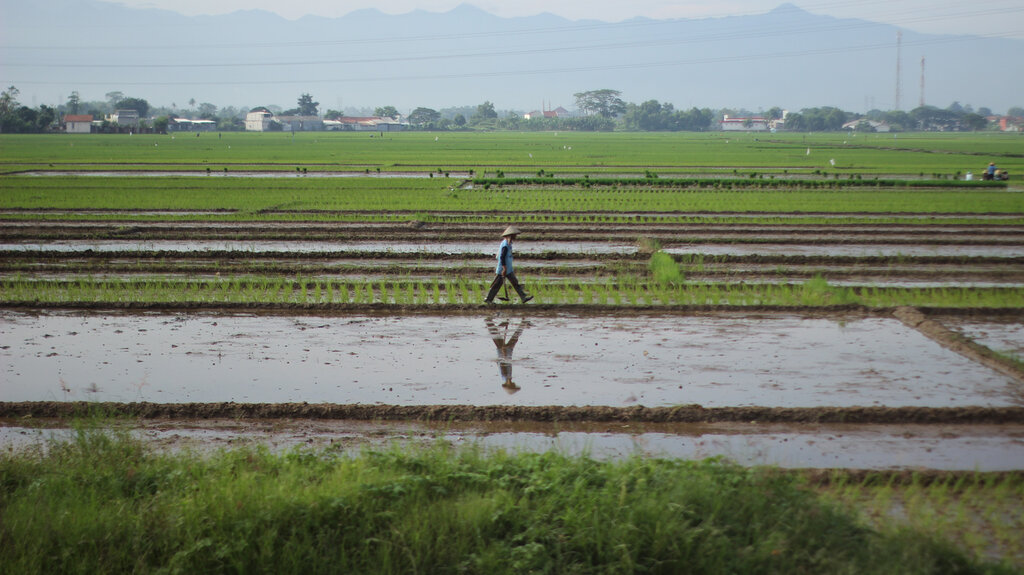
Research by rice-maker Tilda in 2023 and 2024 found emissions of 766 kgCO2e per tonne on its supplier farms versus 1,177 kg on conventional farms (35% lower). The latest three-year analysis shows a 36% average reduction, according to Jon Calland, head of sustainability and external affairs. “Agricultural emissions are particularly challenging because they occur largely beyond [our] direct operations,” he tells Just Food. “Our priority is delivering measurable emissions reductions rather than making net-zero claims without a credible pathway,” he adds.
Local farmer walkin at the rice in paddy field. Credit: Bima prasetya saputra / Shutterstock.com
The company has made decent progress on reducing emissions from rice (notably methane) through an alternate wetting and drying approach. This has also produced 7.5% higher farm incomes, supported by improved yields and reduced input costs. However, as Calland concedes, the carbon footprint of a rice paddy field is not static – “you don’t just suddenly achieve a best-case scenario”, he explains, but “we have a huge ambition to continue to reduce our emissions”.
Tilda is owned by Spanish food group Ebro Foods, which committed to SBTi 12 months ago and is in the process of developing group-wide decarbonisation targets. Westlake at Pladis has gone through this and come out the other end: achieving the “integrity” in the data she desired “took time”.
In three years, Westlake has managed to capture the company’s full carbon footprint and set ambitious targets verified by SBTi. “If our carbon emissions now go down, we really know they have gone down,” she says.
