Feature
Why spermidine might be new anti‑ageing frontier
Spermidine levels decline as we grow older, weakening cellular repair. Could this vital polyamine become the next staple of healthy‑ageing nutrition? Liam Critchley reports.
Main video credit: SergeiShimanovich / Shutterstock.com
An improving understanding of diets and how to try to protect your health in old age are changing how agriculture works, how foodstuffs are processed and what nutrient supplements people take to boost their health. One class of nutrients that has generated a lot of discussion is polyamines, and most specifically, spermidine.
There are three key polyamines – putrescine, spermidine and spermine – that can be converted into each other in the body. All three contribute to cellular function but spermidine is the central molecule between putrescine and spermine – putrescine is the simplest and spermine has fewer biological roles. Spermidine has the biggest physiological specificity and regulates key biological processes such as translation, membrane stability and autophagy. Spermidine is also the most abundant polyamine and has the biggest effect on human health of all polyamines.
Spermidine is found in high concentrations in wheat, soybeans and mushrooms and has been associated with a range of long-term health benefits, including cardioprotective, neuroprotective, and anti-cancerogenic effects. Cardiovascular disease (CVD) is the leading cause of death in the world. Spermidine’s proponents point to its cardioprotective properties because it reduces systemic blood pressure, anti-inflammatory stress pathways and anti-oxidative stress pathways.
However, the level of spermidine in humans is known to decline as a person ages because polyamine-producing enzymes also decline with age, meaning older people obtain optimal levels of spermidine from food alone.
As a result, some older adults are being told to supplement their diet with spermidine nutraceuticals. New fermentation and extraction methods are being developed to make it possible to deliver stable, food-sourced, polyamine ingredients with clean-label credentials to meet demand. The food processing method significantly influences the spermidine content, as does the plant variety, plant part and environmental factors that a crop is grown in, so robust processing and supplement formulation methods have become increasingly important. The growing importance of spermidine supplements has also led to synthetic spermidine compounds being produced through precision fermentation and sold in the supplement market.

As the gut microbiome changes with age, enzyme efficiency and intestinal transport drop sharply. Credit: New Africa / Shutterstock.com
The ageing effect
As we age, how our gut microbiome works and absorbs essential nutrients changes, which can directly affect polyamine production and absorption. Studies have shown there is a 40-60% drop in fecal spermidine levels – which is the production, metabolism and balance of polyamines in the gastrointestinal tract – in older adults above 70 years compared to younger adults that are 25- to 35-years-old.
Humans convert amines from our food into polyamines. The decline in spermidine production from other polyamine compounds – such as putresine and spermine –and their absorption has been linked to different factors. They include a reduction in bacteria in the gut, significant reduction in intestinal transporter efficiency and higher gastric pH levels causing the enzymatic conversion of foodstuff amines to polyamines to drop by half. Research has also shown humans with lowered spermidine concentrations will ‘age’ faster as the decline directly contributes to the pathophysiology of ageing.

The decline of spermidine when ageing may be caused by a similar mechanism: the body experiences decreased biosynthesis and increased biodegradation.
Changshun Shao, Soochow University
Changshun Shao, a researcher in the field from Soochow University in China, believes spermidine decline mechanisms may be similar in principle to how spermidine levels change in the body when we’re seriously ill. “We analysed the transcriptomics data of chronic liver disease and found that spermidine biosynthesis-associated enzymes were generally downregulated in patients with non-alcoholic fatty liver disease or cirrhosis, while the enzyme for spermidine breakdown, spermine synthase, was upregulated. These opposite trends may explain the decline in the spermidine pool in the diseased liver,” Shao explains.
“It is possible that overall decline of spermidine when ageing may be caused by a similar mechanism, i.e., the body experiences decreased biosynthesis and increased biodegradation when ageing”.
How spermidine affects the body
Polyamines are known for playing critical roles in the body, including maintaining mitochondrial function that powers immune cells. If polyamine levels drop with ageing, it leads to a weakened immune response, especially T-cells, but also causes a reduction in neutrophils and myeloid-derived suppressor cells. This means a person’s immune system weakens as they get older because of lower polyamine levels and it also makes any vaccines (which older people have regularly) less effective.
“We have studied the anti-inflammatory and reparative effects of spermidine on macrophages. Macrophages are versatile immune cells that can either initiate inflammatory response or shut off inflammation to promote tissue repair,” Shao says. “What we found is that upon treatment with spermidine the macrophages acquire a greatly augmented anti-inflammatory and reparative effect, which is accompanied by increased oxidative phosphorylation.”
Spermidine itself is very efficient at boosting the immune system but it also plays a critical role in human cells. It is a positively charged molecule so readily interacts with a range of negatively charged biomolecules in the body, including DNA, RNA, ribosomes, proteins and phospholipids. With this property, spermidine plays an active role in the growth and proliferation of cells, organogenesis, transcription and translation, controlling ion channels, initiating autophagy and responding to oxidative, osmotic and other stresses inside the body.
Spermidine is also the only protein in the body that is responsible for hypusination, a very rare translation process in the body but important for normal cell growth, proliferation and embryonic development. Any disruption to the hypusination pathway (such as lower spermidine count) is linked to different health factors including ageing, neurodevelopment disorders and cancer progression.
One of the biggest benefits of spermidine on long-term health is autophagy, the body’s self-recycling system that breaks down and reuses toxic proteins, spent organelles and damaged cell parts.
Autophagy also helps to stave off neurodevelopment disorders by recycling proteins associated with Parkinson’s and Alzheimer’s. Spermidine inhibits histone acetyl transferases and causes an enhanced expression of autophagy-related genes. Spermidine-induced autophagy also helps to protect the liver and increase its longevity, while also playing an active role in skeletal muscle system after injury. Spermidine doesn’t affect the actual muscle regeneration process but autophagy helps to protect the remaining muscle and delays muscle loss.

Epidemiological research implies countries with spermidine-rich diets, like Japan, live longer. Credit: Ned Snowman / Shutterstock.com
Outside of this critical recycling process, spermidine also protects the body against oxidative stresses by protecting against free radical damage and acting as a platform to capture enzymes that produce reactive oxygen species (ROS). Oxidative stress can cause ageing and various pathological conditions when the levels of ROS reach above normal levels but spermidine acts as a direct scavenger to prevent the levels of ROS from getting too high. So, if there’s a lower level of spermidine due to age, it means that higher levels of ROS are likely to take hold in the body, and both alkyl and peroxy radical species will increase ageing effects and potentially cause other health issues.
“The fact that the benefit of spermidine is lost when autophagy is blocked, when mitochondrial reactive oxygen species are quenched, when HIF1-alpha is inhibited, or when mitochondrial biogenesis is blocked suggests that spermidine exerts its beneficial effect by promoting autophagy and mitochondrial fitness in macrophages” Shao says.
Maintaining a high level of spermidine helps to reduce ROS effects and plays a key role in bone protection by inhibiting osteoclast differentiation and maturation (the cells that break down bone cells). Osteoclasts are known to outnumber osteoblasts (which are responsible for producing new bone cells) in old age, which is why osteoporosis is common among many older people. A high spermidine level could help to reduce the risk of old-age osteoporosis by preventing an excessive formation of osteoclasts.
Healthy-ageing nutrition
All these factors mean spermidine is heavily associated with healthy longevity in humans. People are living longer than ever, partly due to medical advances but lifestyle and diet are also having a significant impact.
However, longer lifespans do not always mean a healthy old age. Promoting greater and continued autophagy as people age (and would otherwise decline) is seen as great way to stave off illness and is one of the biggest healthy ageing mechanisms being promoted.
As people age, more supplements get added to their diet, and while many others (such as cod liver oil) have become a staple supplement, the critical effects of spermidine on the body means that spermidine supplements could well be the next big supplement that becomes normalised.
With spermidine directly linked to autophagy, research has shown that supplementation can extend animals’ median lifespan by up to 10–15%. Supplements can start later in life and still have a positive effect, which is better suited to human supplement routines rather than a life-long supplement. The only time they shouldn’t be used is with people who have cancer. Spermidine can help the body to exert an anti-cancer immune response and tumour growth suppression but polyamines have been known to proliferate cancer cells in-vitro, so more caution and personalised advice is required.
It's difficult to directly quantify the life-prolonging effects of spermidine consumption, although, epidemiological research data implies that countries with a spermidine-rich diets live longer. The Mediterranean diet, rich in beans and vegetables is one example and Japan, where a lot of soy-based foods rich in spermidine, like miso soup, or natto, are another.
However, the life-prolonging effect of spermidine is not simply an extra number of days lived. It is more that it helps to block major age-associated diseases – such as cardiac and arterial ageing, colon cancer and neurodegenerative disorders – which then translates to someone being more likely to live longer.
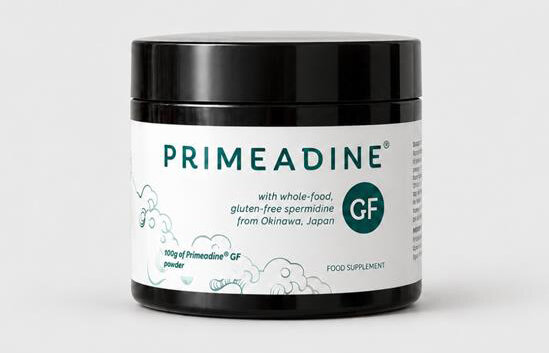
Primeadine® GF Spermidine Powder, Oxford Healthspan’s new gluten-free, food-derived spermidine supplement.
Spermidine is being recognised as a key tool for extending healthspan – a benefit that grows more vital as the global population ages and chronic diseases rise due to poor diet and lifestyle choices.
The spermidine supplements market is expanding. Last month, UK-based nutraceutical group Oxford Healthspan announced it is now offering spermidine powders to go alongside their tablets.
The range, marketed under the Primeadine brand, includes in a gluten-free version, showing that there’s enough interest to cater to different dietary requirements. Moreover, not everyone likes to, or can’t, take tablets, so it shows that spermidine supplements are now entering the next phase of market penetration. The powder can be added into products including smoothies and breakfast bowls, among other foodstuffs. In the future, we may see even more formulations being offered to cater to an even larger chunk of the population.
The powder format gives people more flexibility in how they incorporate it into their daily routine.
Leslie Kenny, Oxford Healthspan
“We’ve always focused on delivering spermidine in a form that people can use consistently,” Leslie Kenny, the founder and CEO of Oxford Healthspan, says. “The powder format gives people more flexibility in how they incorporate it into their daily routine.”
Spermidine products were also in the spotlight at the Vitafoods Europe trade show in May, an event that had a strong focus on supplements for longevity and where companies including Romania-based Secom Healthcare Group showcased spermidine supplements.
As a nutraceutical, spermidine is seen as a critical strategy for reducing age-related diseases and the economic impact these conditions can have on global healthcare systems. It’s estimated that above 3mg per day will be beneficial in the long-term for multiple health-related aspects. This might mean that more people start to eat more spermidine-rich foods, like mushrooms or green peas, in their diet, or we start to see supplements becoming a more common part of our daily tablet collection.
