Feature
How food brands are upping focus on fibre
We don’t eat enough fibre but more of us are trying to do so – and brands are responding. Andreia Nogueira and Raghavendra Verma report.
Main video supplied by xijian/Creatas Video via Getty Images
Globally, consumers do not eat enough fibre – but, amid the rising interest in gut health, there are signs more people are looking to get more of the ingredient into their diet.
Researchers at GlobalData, Just Food’s parent, say gut health is “an everyday wellbeing priority”. They point to a survey of global consumers who were asked what health outcomes they were actively trying to improve – 42% of respondents pointed gut health.
And, in recent months, the trend of “fibremaxxing” has, via social media, put the nutrient firmly in the spotlight. Borrowing from the broader ‘maxxing’ culture that, predominantly online, promotes pushing attributes or habits to their perceived optimal level, fibremaxxing, as you’ve probably guessed, is the online-driven behaviour of deliberately maximising fibre intake.
Younger consumers are especially engaged GlobalData argues. Its survey showed 40% of Gen Z and 45% of Millennials are actively trying to improve their gut health.
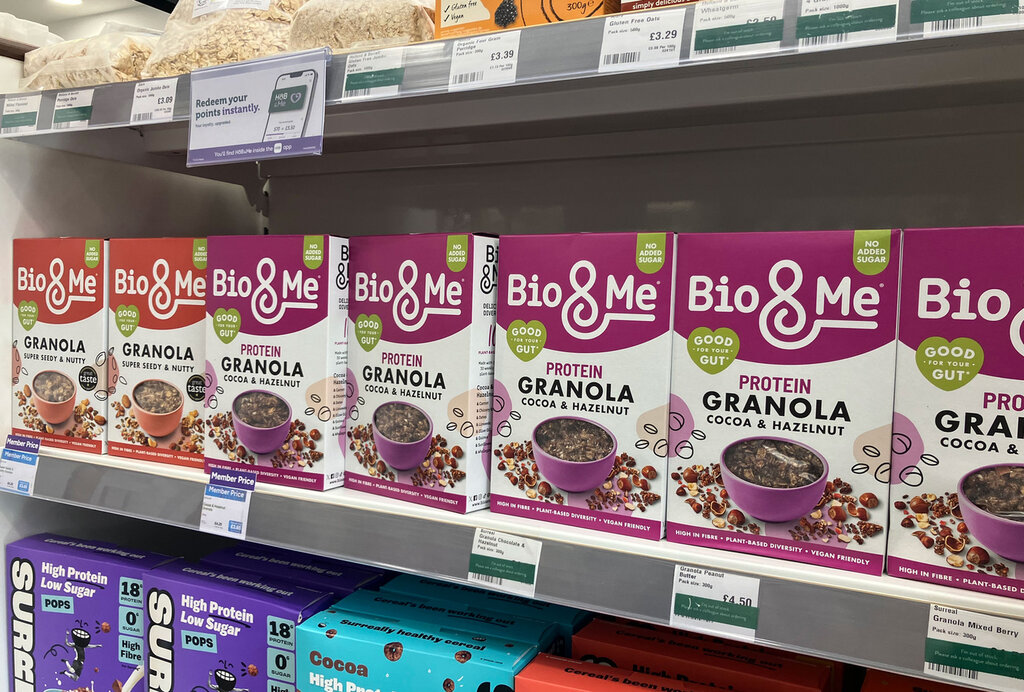
Jon Walsh, the co-founder and CEO of UK granola business Bio & Me, says fibremaxxing is part of a confluence of factors that means gut health is “having its moment”.
“The thing about the current social media buzz is it’s on top of strong foundations, if you like. That steady growth, if we call it, was already there and the right brands doing it the right way were already coming through. This is just the nice bit on top,” Walsh says. “Fibre, which has been all about brown, bran and poo, basically, for 30, 40, 50 years, is now having a sexy moment and that’s great. Long may it continue.”
Caption. Credit:
From niche to mainstream
Fibre does appear to be moving from being what Mandy Saven, trends and foresight director at trends intelligence consultancy Stylus, calls “a niche and unattractive conversation to a mainstream concern”.
Saven says increased interest in protein and fibre among the users of GLP-1 medication has been a factor but she also outlines a broader set of reasons for fibre rising up the agenda.
“Mid-lifers are focusing more on fibre because it helps manage several age‑related shifts at once – steadier blood sugar, better digestion, improved heart health and easier weight control – making it a simple, reliable way to support overall wellbeing as metabolism and dietary needs change,” she explains.
“Young people are also paying more attention to fibre because it fits naturally into the health priorities shaping their generation. They're growing up in a culture that talks constantly about gut health, mental wellbeing and metabolic balance – and fibre is one of the few nutrients that touches all of those areas at once. High‑fibre foods also align with the way many younger people already eat: more plant‑based meals, more whole foods, more interest in microbiome‑friendly ingredients and more awareness of blood‑sugar stability thanks to social media.”
Fernanda Covarrubias, senior marketing manager at Tate & Lyle, says the ingredients supplier is seeing “strong and sustained growth in demand for fibre ingredients across multiple regions and categories”.

Mainstream food and drink companies are increasingly prioritising fibre to enhance the nutritional profile of everyday products.
Fernanda Covarrubias, Tate & Lyle
She adds: “Investment is particularly strong among companies in categories such as beverages, bakery and snacks, dairy and dairy alternatives, and nutrition-focused products.
“What’s notable is that fibre is no longer limited to niche health or functional brands. Mainstream food and drink companies are increasingly prioritising fibre to enhance the nutritional profile of everyday products. Two areas I find particularly compelling right now are high-fibre snack formats and sparkling juice beverages.”
One snacks giant with its eye on fibre is PepsiCo. “We see a growing consumer interest in foods and beverages with functional ingredients and fibre is increasingly part of that conversation. While this is a growing trend it’s an area PepsiCo has been focussing on for years,” a spokesperson says.
The spokesperson points to Quaker, the cereal range that’s part of PepsiCo’s portfolio, as a brand that has “long helped bring fibre into daily routines through oats, ready-to-eat cereals and snacks”. However, the US giant has recently stepped up its efforts in its snacks business and, notably, paid nearly $2bn for Poppi, the US prebiotic soda brand, last year.
“Smartfood FiberPop and SunChips Fiber have both been recently created to deliver flavourful, convenient snacks with fibre as interest in fibremaxxing rises and as people look for easy ways to add fibre without giving up taste," the spokesperson says. “These innovations were designed around clear consumer insights – meeting growing interest in functional ingredients while ensuring taste and convenience remain front and centre.”
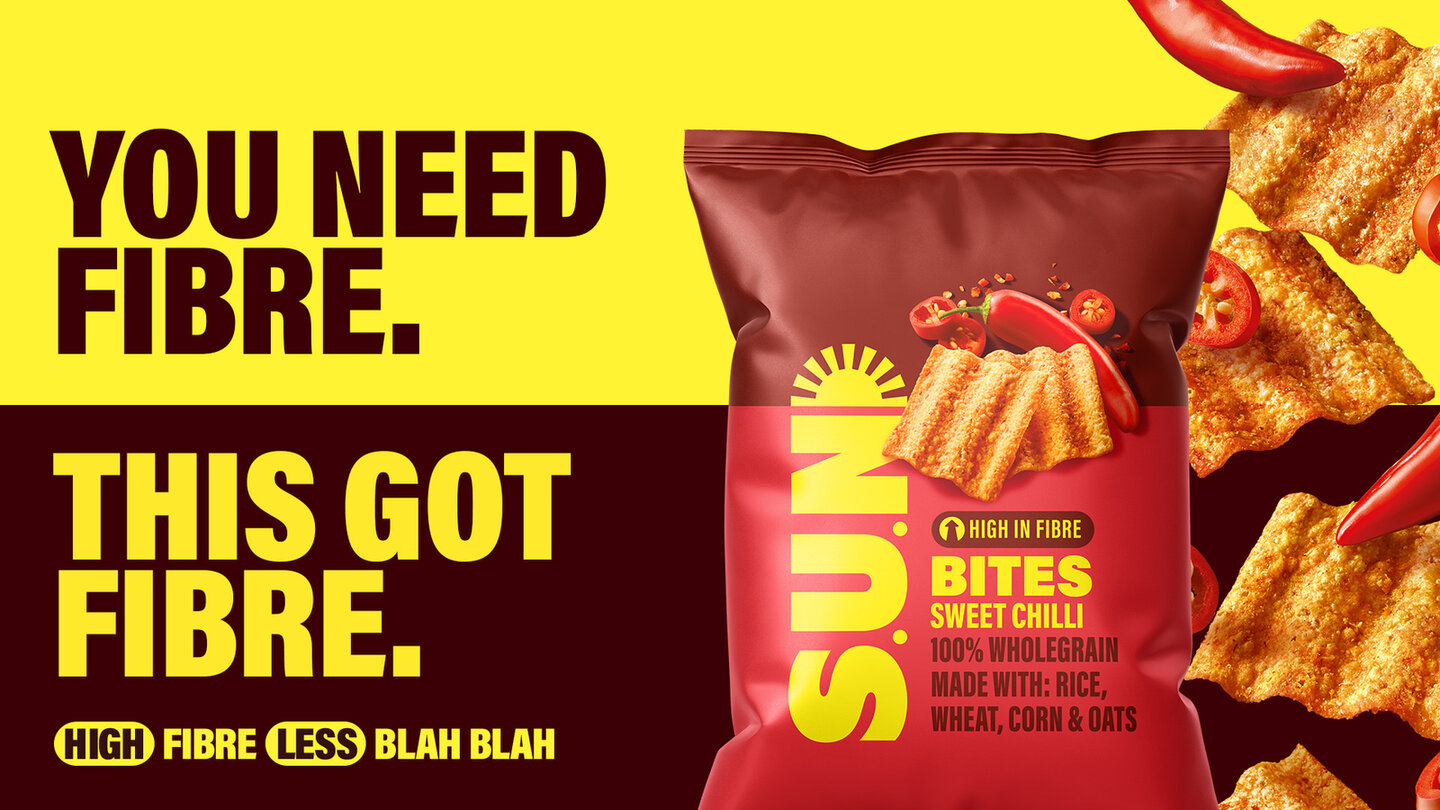
In the UK, PepsiCo given local snacks brand Sunbites a new name and packaging as the company eyes growing interest in fibre. Sunbites, launched back in 2007 as a healthier savoury snack, is now called S.U.N. PepsiCo said the majority of UK consumers are trying to adapt to healthier lifestyles but, citing UK government research, noted more than nine in ten of adults in the country do not eat the recommended daily amount of fibre of 30g. The S.U.N. snacks contain 6.7g of fibre per 100g.
Credit: PepsiCo
Covarrubias believes consumers’ understanding of the different effects of boosting their fibre intake is starting to improve.
“One of the most interesting aspects of this trend is how fibre is beginning to evolve from a single benefit nutrient into a broader wellbeing signal,” Covarrubias says. “While digestive health remains the most widely recognised benefit, consumers are gradually becoming aware of fibre’s wider role in areas such as satiety, balanced blood sugar and overall nutritional quality. There is still work to be done in helping consumers fully understand these benefits, but this growing awareness is helping fibre move from a functional claim to a fundamental part of everyday nutrition – and that’s where we see the greatest opportunity for future innovation.”
Seeing the benefits of fibre, Jeni Britton, founder of the US-based Jeni’s Splendid Ice Creams, launched fibre bar company Floura & Co. last year.
Using upcycled ingredients like mango rinds and apple cores instead of adding synthetic fibre to products. Britton and her colleagues at Floura & Co. make snack bars containing 15g of fibre and are on sale through independent retailers, coffee shops and online.
High-fibre snacks are projected to grow significantly.
Jeni Britton, Floura & Co.
“It took us a couple of years to get our formulation right and during that time everyone told us that it was not about fibre – it was all protein and probiotics,” Britton says. “But there is so much research demonstrating that fibre is the key to unlock true health and we stayed focused. I think that's why the industry is responding at the perfect time for us.”
Britton sees the increased interest in fibre not as a trend but as a correction. “The market is catching up fast. High-fibre snacks are projected to grow significantly – into a $40bn-plus category by 2030 – and fibre is now being called out as one of the defining food trends of 2026.”
Emerging-market interest
The interest in fibre is not only present in developed economies. It also evident in emerging markets like India. “We are seeing a massive shift from ‘zero sugar’ to ‘high Fibre’ as the primary health claim,” Dr Prabodh Halde, chairman of the All India Food Processors' Association’ western region, tells Just Food.
Urban professionals, diabetics and younger consumers have been the first to adopt high-fibre staples. Dr Halde says Gen Z and Millennials in India are also influenced by global ‘bio-hacking’ trends of using science, technology and self-experimentation, viewing fibre as a tool for skin health and weight management, sparking interest from food manufacturers. “Food brands are launching multi-millet breads, biscuits, and pastas,” he says.
Consumer-healthcare businesses are also eyeing demand. Fenuflakes, which contain unflavoured seeds and flakes, is a product developed by Maharashtra-based Indus Biotech and marketed to consumers for adding to yogurt or other food items. In future, the company hopes to make it a part of packaged food items manufactured by other companies, Prateek Mukane, a business development senior executive at the company, says. “Fenuflakes can be added to food formulations like breakfast cereals, cookies, crackers or protein and nutrition bars.”
Indian nutritionists promote high-fibre diets but, according to Dr Darshini Bali, a nutritionist based in Noida, near New Delhi, fibrous diets are generally ignored by Indians, with many health-conscious individuals still only focused on eating more protein. “The typical Indian diet of chapatis and vegetable stew lacks fibres and very few of my clients are aware of its importance,” she says.
Dr Bali does not recommend packaged fibrous food, arguing more processed items can be high in sugar and salt while containing unhealthy vegetable oils. “We need to eat raw,” she says. “Fibre should only be natural.”
Matching protein in importance
Dr Yvonne Finnegan, scientific director at the Ireland-based Finne Nutrition & Regulatory Consultancy, believes dietary fibre will become as important as protein thanks to the rising awareness of gut health and fibre’s health benefits.
Realistically, I don’t think it will replace the protein trend but appears to be starting to run parallel to it.
Dr Yvonne Finnegan
“In terms of the evidence, fibre should now take the lead,” she says. “As a dietitian, it’s been frustrating to see so little attention given to fibre. The health benefits of increasing dietary fibre go beyond ‘keeping you regular’ with higher intakes (above 25g/day for adults) being associated with lower risk of cardiovascular disease, colon cancer and type 2 diabetes.
“When we look at dietary surveys from most western countries, protein intakes meet requirements, whereas hardly anyone is meeting the minimum amount of dietary fibre. Realistically, I don’t think it will replace the protein trend but appears to be starting to run parallel to it as awareness of gut health has become more important. With the increased use of GLP-1 medications, muscle wasting and constipation have been identified as potential issues and these two nutrients can be part of the solution and are being considered jointly in GLP-1-friendly foods.”
Dr Finnegan, who in the past has worked for Danone and Cadbury, says how brands look to capitalise on consumer interest depends on the product category.
Prioritising ingredients that are naturally fibre-rich is best but will not suit every product, she explains. “In categories where high-fibre options already exist, brands could make wholegrain or brown variants the default in advertising and recipe inspiration.
She has a couple of notes of caution. “If adding an isolated fibre, its key that product developers understand the tolerance of the particular fibre in their particular food format and don’t exceed that just to chase a ‘high fibre’ claim.
“Be careful of using fibre to create a ‘health halo’ on an otherwise unhealthy product, although I have mixed feelings on this. On one hand, if you can make a treat food better by adding fibre, then isn’t that a good thing? But messaging needs to be handled carefully so consumers still understand their place in the diet. Front-of-pack nutrition labelling may help offset halo effects, though more research would be useful. A very purist stance on fibre enrichment could also risk missing those with the lowest fibre intakes altogether. It’s a tricky one.”
