Interview
“People still want to indulge” – Toms Group CEO Annette Zeipel surveys GLP-1 wave as confectionery grapples with cocoa volatility
Toms Group CEO Annette Zeipel sits down with Simon Harvey to discuss how, against a challenging backdrop, the Danish confectioner is plotting a course for growth.
Main image: Annette Zeipel, CEO at Toms Group. Credit: Toms Group
T oms Group is still banking on reaching its low, single-digit sales growth target this year despite the turmoil in the Middle East, which risks sparking another wave of energy-led supply chain inflation for food companies around the world.
For the time being, the Denmark-headquartered confectionery manufacturer is waiting it out as Toms seeks to build on an 7% sales increase last year, which took its top line to DKr1.80bn ($283m) and contributed to DKr41m in net profit.
Annette Zeipel, a former Mars and Wrigley executive, joined Toms as CEO in 2021 and has since ramped up investment in manufacturing in Poland, while making changes to its production set-up at home in Denmark.
Simon Harvey: Could you outline Toms’ business structure?
Annette Zeipel: Toms is a Danish-rooted company but we are an internationally driven business. More than 60% of our turnover is in the Nordics but a lot of our focus for growth and expansion is international. We are in more than 100 countries, partly through distributors and partly through our presence in the travel retail business.
In Denmark, we have an iconic status and some of our brands go back to 1884. We manufacture chocolate, sugar and liquorice confectionery and are market leader with an 18% market share. Haribo is our main competitor followed by Mondelez and Cloetta.
In Sweden, we are number five with a 4.5% market share. There we are more of a challenger brand, where we are not represented with our full portfolio but very much so with our Anthon Berg brand of chocolate and marzipan products. We are huge in the Easter business, close to a 40% market share. And we have a significant role in the wine gum business with our Ferrari brand, which originates in Sweden.
Simon Harvey: You mentioned Haribo. Does that mean Toms supplies gummies, too?
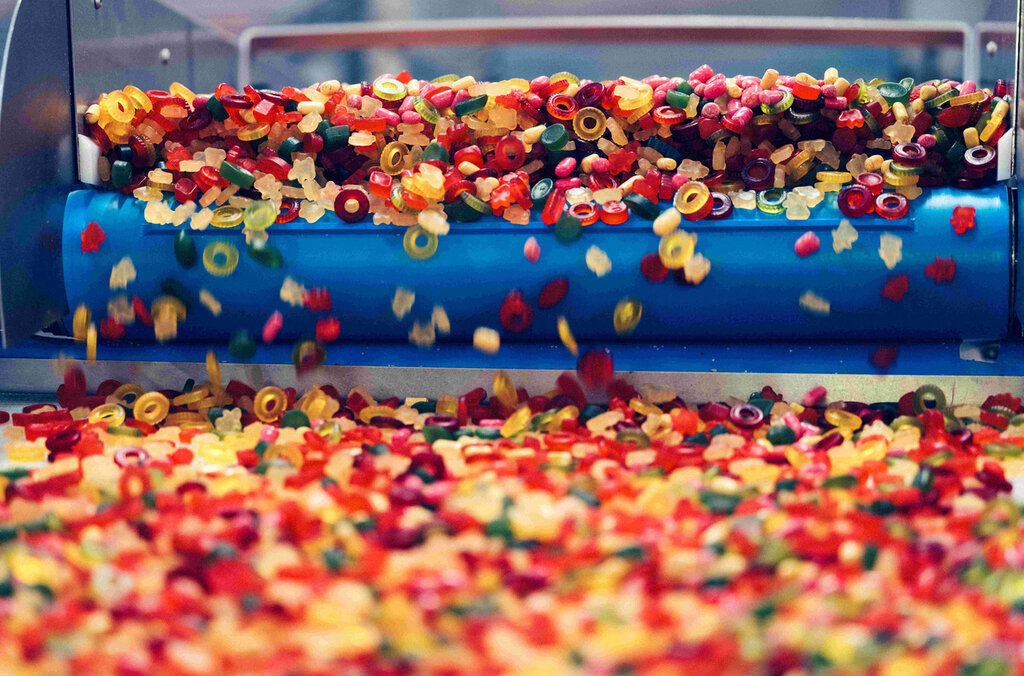
Annette Zeipel: Yes, we do but not in a bear shape, of course. We are more known and more unique in liquorice. Two years ago, we also launched a more premium, upper mainstream liquorice brand in retail and that’s what we are expanding innovation-wise.
Simon Harvey: I’ve noticed in the UK that a lot of the old-style liquorice products have disappeared. What are you seeing in liquorice?
Annette Zeipel: It’s a polarising flavour. People love it or hate it but markets like Denmark, northern Germany, Poland and the Netherlands are big in liquorice.
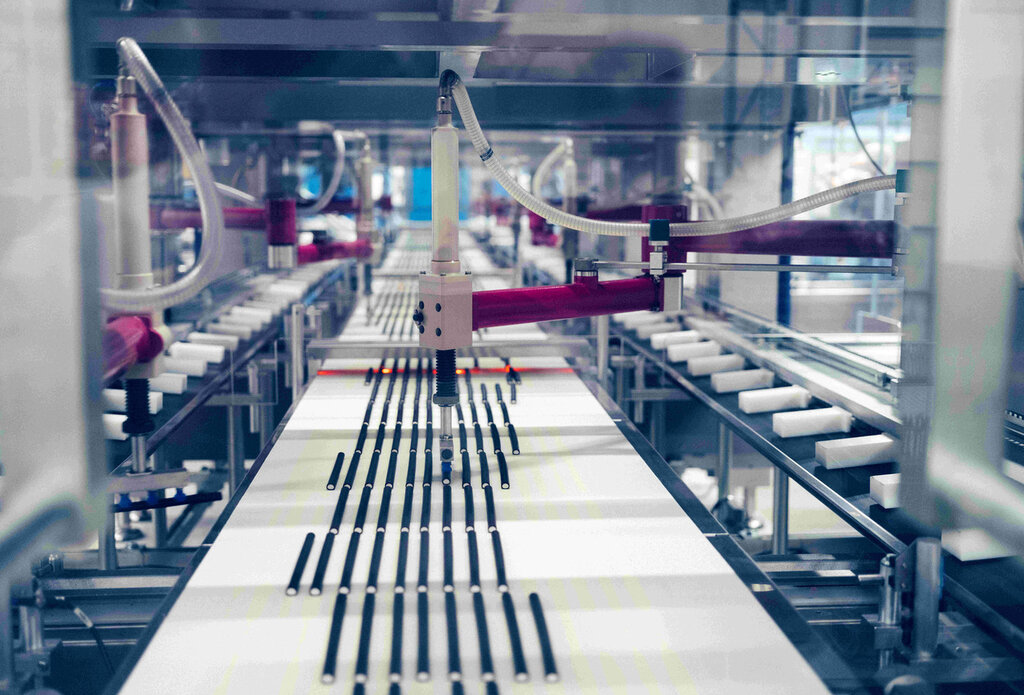
We see a lot of the traditional products are coming back. For example, when Toms acquired the Swedish Ferrari business, including liquorice, we renamed products to Toms. We are going back to the old brands and using the Pingvin (penguin) brand again and that is proving successful with consumers, especially younger consumers.
Credit: Toms Group
Simon Harvey: Outside of the Nordics, what are Toms’ largest markets?
Annette Zeipel: A huge market for us is the US through Costco. Other big markets are France, the UK, Australia and eastern Europe. We’re trying to expand the Chinese business after the Covid reset and also Japan but that’s a small part of the portfolio and is mostly our liquor-filled chocolate bottles. That’s more targeted to the gifting and seasonal business like Christmas and Chinese New Year.
Simon Harvey: Is China a market where demand is growing for confectionery given its more of a discretionary category?
Annette Zeipel: We see growing demand. Volume-wise, compared to consumption in Western Europe, it is much lower but because of the population size it’s a huge opportunity.
Simon Harvey: What’s the status of Denmark’s confectionery tax? Last August, there were plans to scrap the levy. An election has happened since.
Annette Zeipel: The previous Danish government had planned to phase out the sugar tax and that was supposed to be implemented on 1 July. Then they announced an early election, which happened in March. The moment they announced the election, everything that had not been fully approved in Parliament went on hold. The world has changed since and I think there will be other priorities. Nobody in the industry now expects the sugar tax to be phased out.
We didn’t expect a huge volume boost from it but, of course, there was a lot of work preparing for it because it would shift the whole relative structure of price points for certain products in the market.
In Denmark, our biggest market, 70% of confectionery purchases are from promotion. Danes are very price-sensitive so there’s a bit of frustration about announcing something which causes work and then not doing it and causing double the work. We had enough double work last year with tariffs announced, then unannounced and then raised and then reduced and then changed.
Simon Harvey: Sticking on sugar, what impact is Toms seeing on purchasing habits given consumer interest in healthier snacks. Do you have any plans for reformulation?
Annette Zeipel: No impact yet. For many years, a protein segment has been established in Denmark and Sweden. That trend hasn’t really diminished demand for normal confectionery.

We need to understand what GLP-1s will do to consumer behaviour.
For some of our products that are moving from Denmark to the expanded factory in Poland, we are looking at what our flexibility and versatility is to do other things than traditional products but it’s not that we are massively shifting the innovation pipeline yet. Of course, we are aware about the other trend – the GLP-1 trend.
Simon Harvey: What is the plan of action on GLP-1s?
Annette Zeipel: We need to understand what it will do to consumer behaviour. People still want to indulge. We assume there will still be basic consumption for traditional confectionery but a lot of the consumption will probably shift and you will have demands on additional health benefits – the functional benefit, something good for my gut, and higher protein, less sugar.
Our near-term pipeline is still more driven by flavour extensions, playing with mouth feel and texture, playing with expansions of our established brands in more informal sharing. So, instead of just a very formal praline box with a golden or fancy shape, golden colour etc, single-wrap chocolates that you put in a bowl on the table and share.
Simon Harvey: What is the general awareness of GLP-1s in Denmark and the Nordic markets?
Annette Zeipel: Industry is very aware. We see the US as the first wave before it comes to European markets and the Danish market. The general public awareness in Denmark is probably higher than in most other European markets because one of the big players in this area, Novo Nordisk, is a Danish company. But penetration of the drug in Denmark is lagging way behind the US.
Credit: Toms Group
Simon Harvey: What about other challenges like cocoa? Prices have come off the record highs but they still remain elevated. What is Toms expecting going forward?
Annette Zeipel: We still see the impact. Everybody in this industry, at least the bigger players, will tell you we are using more expensive cocoa because you have a time lag to production and a lag to selling. That’s why prices are not immediately reacting to the market price coming down. It also didn’t react immediately to the market price going up and nobody actually even priced to the full level.
Simon Harvey: Another way of putting it: will Toms take any more pricing linked to cocoa?
Annette Zeipel: We won’t take price from cocoa at the moment. We are aware of incoming inflationary pressure in many areas but not driven by the genuine cocoa raw material price. But really more from energy and the knock-on costs on everything else – plastic, paper packaging, transport, supply chain disruptions.
We foresee high volatility in cocoa prices going forward.
We foresee something coming which is probably similar to what happened in 2022-23 when the inflation wave started with the energy crisis after the Russian war in Ukraine. I don’t see cocoa being a price driver but, even if the war in the Middle East had never have happened, we foresee high volatility in cocoa prices going forward.
The trees are old, they have diseases. There’s not enough money for the farmers to replace them and, even if they replace them, it takes seven or eight years before they are ready to be harvested. There’s the climate and many more weather incidents. When we talk to our suppliers, they make us very aware of the future volatility.
Simon Harvey: In manufacturing, will Poland become Toms’ key production base for chocolate when the switch from the Ballerup site in Denmark is completed?
Annette Zeipel: We had two chocolate factories running in parallel, which is a costly set-up. One of them was brand new because the Polish factory was only built in 2019 and went into production at the end of 2020. Our current headquarters, the Ballerup factory, where we have been sitting since 1962, is very old and has high maintenance costs. We decided we’d rather spend the money not in maintaining an old building but in expanding the new factory and also building new production lines.
Simon Harvey: What benefits does the Poland factory bring?
Annette Zeipel: This is a major structural improvement for our profitability going forward, one in terms of not having the double cost, having everything run in a modern factory, and, of course, it’s significantly cheaper in Poland.
Credit: Toms Group
Simon Harvey: Do you plan to enter new markets?
Annette Zeipel: Not new ones but, with the global uncertainties and geopolitical surprises, we have talked in the last two years about the greater urgency on our growth opportunities in the markets closer to home, specifically within the EU. We see a lot of potential in Germany and in Poland.
In Germany, we have a whole portfolio of brands with Hachez and Feodora but also we see our offers [products] on Anthon Berg are really relevant. We changed our set-up two years ago where we are now working with one of the very strong distributors in the food business in Germany.
In Poland, we have established a platform and we see significant growth. We grew 40% last year alone and we are only in a couple of retailers. There’s so much more white space for us to grow. There is also marzipan but not as huge as Denmark. Even liquorice works in parts of Poland, so we see a huge overlap with our broader portfolio.
Simon Harvey: On the financial front, are you still expecting sales to grow in the low, single-digit area this year given the turmoil in the Middle East?
Annette Zeipel: That expectation was raised before the war started. The direct immediate impact we see on the travel-retail business is not changing that expectation. If there’s a bigger economic crisis coming or a huge inflation wave, at first on cost and then on consumer prices and therefore impacting demand, or if there are supply chain disruptions, those are not reflected in the projection. And I cannot make an assessment on that.
Simon Harvey: I imagine there’s a certain protection from consumers wanting to treat themselves and from brand loyalty?
Annette Zeipel: I would say there’s a split. There’s high interest in trying out new things and there’s a fervour for innovation, textures and flavour and playing around with new experiences. But, especially in what is currently our consumer group, there is a high loyalty to the brands.
We are putting a lot of effort into rejuvenating our brands and reaching out to younger consumer groups of 30 to 35-plus, the ones who are creating a new family and new traditions. But we are very aware that we need to also adjust and be attractive to the regrowing consumer base, the younger ones.
